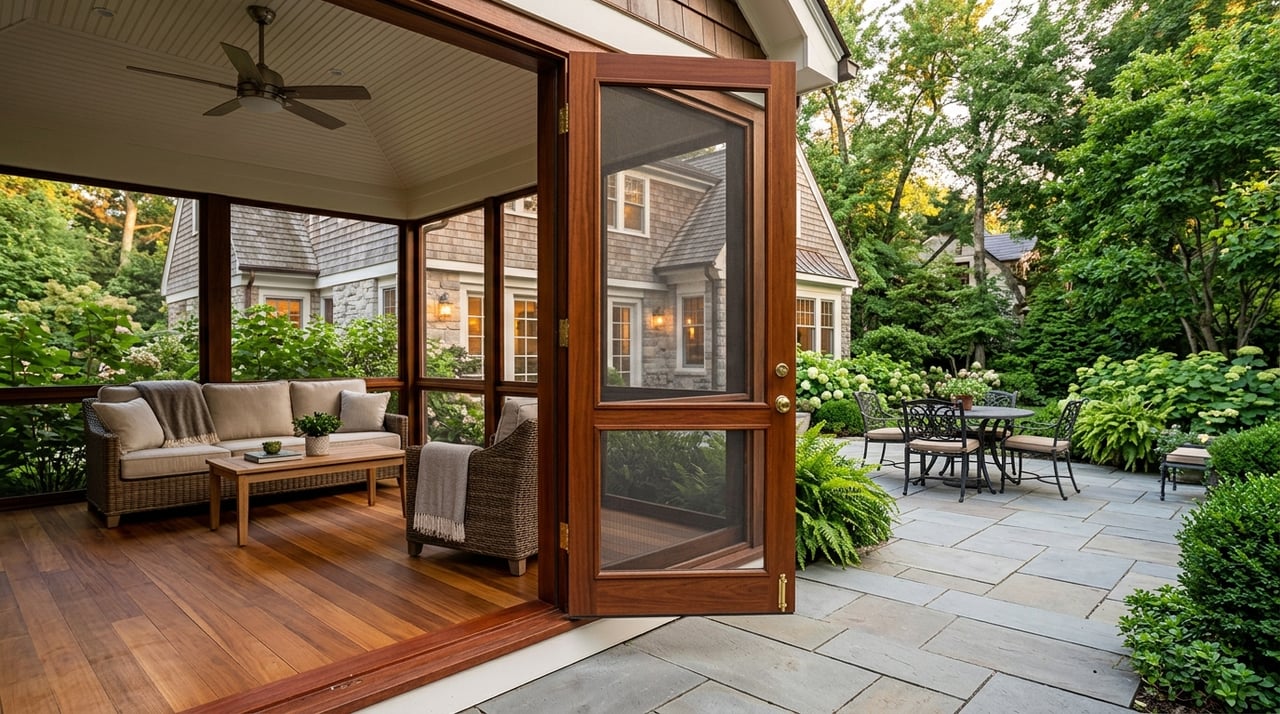
Looking for a suburb that feels polished and practical without losing its connection to nature? Armonk offers a distinctive balance: a compact, walkable village center paired with a broader landscape of detached homes, larger lots, and wooded surroundings. If you are trying to understand what everyday life here really feels like, this guide will walk you through Armonk’s layout, housing pattern, outdoor amenities, and community rhythm. Let’s dive in.
Armonk’s Setting and Identity
Armonk is the hamlet center of the Town of North Castle, located near the Connecticut line and the Kensico Reservoir. North Castle spans about 26 square miles, and Armonk functions as its central downtown or village area. That gives you a village-style core within a much larger suburban setting.
This setup helps explain why Armonk often feels different from denser inner-ring suburbs. North Castle notes that the town is about 35 miles from New York City, so you can see the appeal for people who want commuter access with a little more breathing room. The result is a place that feels connected, but not crowded.
Armonk’s country-style character also has deep roots. North Castle’s town historian notes that in the early 1900s, the area attracted New Yorkers seeking country estates with access to car and train commuting. That history still shows up today in the way suburban convenience and a more pastoral setting coexist.
Village Living Meets Open Space
One of Armonk’s defining features is the contrast between its downtown and its surrounding neighborhoods. Planning documents describe downtown Armonk as compact and walkable, with active retail along North Main Street and pedestrian-oriented features like streetscaping, lighting, and pavers. In simple terms, the center is designed to be used on foot.
Step beyond that core, and the feel shifts. The town’s planning framework points to a lower-density residential pattern where detached homes and more generous lots are common. That balance is a big part of what gives Armonk its country-style suburban identity.
The town’s Hamlet Design Guidelines reinforce this vision. They support pedestrian-friendly development, encourage mixed-use activity in the hamlet, and emphasize design choices that strengthen walkability and a sense of place. That means the village center is meant to be both functional and social, not just a place to run errands.
Housing in Armonk
If you are picturing Armonk as a primarily detached-home market, the town’s comprehensive plan supports that view. North Castle says roughly 93% of its land area is zoned residential, and eight residential zones allow only single-family homes as the primary use. Minimum lot sizes range from 5,000 square feet to 4 acres, which speaks to the variety of spacing and scale you may find.
The same plan notes that all multi-family districts are located in Armonk. That does not make Armonk a high-density market, but it does mean the hamlet includes the town’s more concentrated housing options. For buyers, that can translate into some flexibility near the village center, while the broader area still reads as largely single-family and low-density.
In lifestyle terms, this pattern often means you are choosing between two complementary experiences. You may prefer the convenience of being closer to the center, or you may be drawn to the quieter, more wooded feel of the surrounding residential areas. Both are part of Armonk’s appeal.
What Daily Life Feels Like
Armonk’s daily rhythm is shaped by more than housing. It is also shaped by recreation, local businesses, community events, and commuting patterns. That mix helps the hamlet feel active without feeling overbuilt.
North Castle’s Parks and Recreation Department stewards nearly 350 acres of parkland and offers programs for all ages. The town highlights summer camps, after-school programming, and adult and senior activities. For you as a resident, that suggests recreation is woven into weekly life, not treated as an occasional extra.
The town also points to several specific amenities in Armonk. New-resident information highlights the North Castle Community Park dog park at 205 Business Park Drive and the town pool at 3 Greenway Road. These are the kinds of practical amenities that can shape how a town feels from week to week.
Wampus Pond County Park adds another layer to the lifestyle picture. The town notes that rowboats are available there on weekends and holidays from Memorial Day through Labor Day, and the park has seasonal rules and facilities. It is a small detail, but it helps illustrate how outdoor time can be part of everyday living in Armonk.
Nature Is Part of the Backdrop
Armonk’s setting is not just suburban. It is also environmentally defined in ways you can feel as you move through the area. North Castle identifies Wampus Pond, Byram Lake, both branches of the Mianus River, and the Mianus Reservoir as critical environmental areas.
That environmental framework helps explain why Armonk often feels wooded and nature-adjacent, especially outside the downtown core. Even when the village center feels polished and organized, the edges of the community still reflect a stronger connection to open space and natural features. For many buyers, that is central to the town’s appeal.
Downtown Armonk Has a Social Role
A lot of suburbs have a commercial center. Armonk’s planning documents suggest something more intentional. The Hamlet Design Guidelines specifically encourage al fresco dining, pocket parks, and pedestrian corridors, which points to a downtown designed for gathering as well as shopping.
That matters because it changes the experience of the village center. Instead of functioning only as a retail strip, downtown Armonk is meant to feel inviting and usable. If you value a place where errands, meals, and casual time out can happen in the same setting, that design approach adds real lifestyle value.
North Castle’s residents page also points to the town’s library system and welcoming merchants as part of what makes people want to stay and return often. That supports the idea of Armonk as a community with an active civic and retail life, even though it remains largely residential overall.
Community Events Add Energy
Armonk’s event calendar plays a meaningful role in its identity. The official Armonk Outdoor Art Show site says the 2026 show will take place on September 26 and 27 and feature about 160 artists from across the country. The event also benefits the North Castle Public Library and is supported by more than 300 volunteers.
That tells you something important about the community. Events here are not simply entertainment. They also reflect a strong local volunteer culture and a downtown that can support shared experiences.
The same source notes that Armonk Has Heart will place 20 artist-made sculptures inside participating local businesses throughout downtown, encouraging visitors to explore shops and restaurants. For residents, this adds to the feeling that the village center is active, creative, and community-oriented.
Commuting and Access
For many buyers considering Armonk, commute options remain part of the decision. North Castle’s transportation page lists Metro-North Railroad and Bee-Line Bus service. The town’s new-resident page also directs commuters to the North White Plains station parking wait list.
That does not mean every commute will look the same, but it does confirm that regional access is part of Armonk’s practical appeal. You can see how the location supports people who want suburban space while still needing a workable connection to the broader New York area.
Why Armonk Appeals to Buyers
Armonk stands out because it combines features that are often hard to find in one place. You get a pedestrian-oriented village center, a predominantly detached-home housing pattern, meaningful park and recreation access, and a setting shaped by wooded landscapes and water features. That mix creates a lifestyle that feels both structured and relaxed.
For some buyers, the draw is the village core and its convenience. For others, it is the lower-density surroundings and larger-lot residential pattern. Often, the real value is the combination of both.
If you are comparing Westchester communities, Armonk can make sense when you want a town that feels established, outdoors-oriented, and locally active without giving up everyday functionality. It offers a version of suburban living that feels thoughtful, balanced, and grounded in place.
Whether you are exploring Armonk for the first time or weighing it against other Westchester markets, having the right local perspective can make your decision much clearer. If you want thoughtful guidance on Armonk and the broader Westchester market, Andrea K. Weiss can help you evaluate the lifestyle, housing options, and market fit with confidence.
FAQs
What is the overall lifestyle like in Armonk, NY?
- Armonk offers a compact, walkable village center within a broader low-density suburban setting, with detached homes, outdoor amenities, and a strong connection to nature.
What kinds of homes are common in Armonk, NY?
- North Castle’s planning documents indicate that the housing pattern is largely single-family, with residential zones that allow detached homes as the primary use and minimum lot sizes ranging from 5,000 square feet to 4 acres.
Does Armonk, NY have a walkable downtown?
- Yes. Town planning documents describe downtown Armonk as compact and walkable, with active retail, pedestrian improvements, and design features intended to support social and everyday use.
What outdoor amenities are available in Armonk, NY?
- North Castle highlights nearly 350 acres of parkland town-wide, plus amenities in Armonk such as the North Castle Community Park dog park, the town pool, and seasonal rowboating at Wampus Pond County Park.
Is Armonk, NY convenient for commuting?
- North Castle lists Metro-North Railroad and Bee-Line Bus service as transportation options, and the town also provides information related to commuting through the North White Plains station parking wait list.
What makes Armonk, NY feel country-style?
- Its identity comes from the blend of a small village center, predominantly detached homes, larger lots, wooded surroundings, and environmental features like ponds, reservoirs, and river corridors.